
Indian equities on Dalal Street saw volatility as global market trends and fresh tariff concerns linked to Donald Trump impacted investor sentiment. Track Sensex, Nifty50 movement and key market drivers for March 30, 2026.

Foreign Portfolio Investors (FPIs) have withdrawn Rs 27,048 crore from Indian equities so far in May, bringing the total outflows for 2026 to Rs 2.2 lakh crore, driven by global macroeconomic and geopolitical uncertainties.

Foreign Portfolio Investors (FPIs) have withdrawn nearly Rs 43,000 crore from Indian equities in the first week of June, contributing to a total outflow of Rs 2.67 lakh crore in 2026, driven by a global shift towards technology and AI-linked opportunities and persistent rupee depreciation.

Morgan Stanley analysts, led by Ridham Desai, predict that the next phase of the Indian market rally will be primarily driven by the April-June quarter (Q1FY27) corporate earnings season and the performance of the monsoon.

Indian benchmark stock indices, Sensex and Nifty, extended their winning streak for a third consecutive day, driven by positive global market trends and a significant softening of crude oil prices following a peace deal between the US and Iran.

'India has initiated a bear market and we will still go lower. It has nothing to do with the economy.'
Indian equity benchmark indices Sensex and Nifty declined in early trade, driven by persistent concerns over the unresolved US-Iran situation and continued outflows from foreign institutional investors.

Indian benchmark indices Sensex and Nifty experienced a sharp decline in early trading due to escalating tensions in the Middle East, driving crude oil prices higher. Global market bearishness and foreign fund outflows further contributed to investor unease.

'Customers do not recover the original making charges paid on old jewellery. Sentimental value is lost when heirlooms are exchanged.'

Among Sensex firms, Sun Pharma, Tata Steel, Power Grid, Asian Paints, NTPC and Bharti Airtel were the biggest laggards. Tata Consultancy Services, Tech Mahindra, Infosys, Adani Ports, Axis Bank and HCL Tech were among the gainers.

The Indian stock market's movement this week will be significantly influenced by the outcome of US-Iran talks, global crude oil prices, and the trading activities of foreign institutional investors (FIIs), according to market analysts.
Indian benchmark indices Sensex and Nifty closed marginally lower due to profit-taking, following the Reserve Bank of India's decision to keep the repo rate unchanged while lowering its growth expectations for the current fiscal year and forecasting higher inflation.

Indian benchmark equity indices, Sensex and Nifty, opened higher, tracking positive global trends and easing crude oil prices, fueled by hopes of a swift resolution to the West Asia conflict. Track Nifty 50 and BSE Sensex performance and key global triggers.

Indian benchmark indices, Sensex and Nifty, extended their winning streak for a fourth consecutive session, driven by a significant drop in crude oil prices following a peace deal between the US and Iran. This development has fuelled investor confidence and buying activity across the market.

N Chandrasekaran, chairman of Tata Consumer Products (TCPL), stated that India continues to experience credible economic growth, driven by strong demographic fundamentals and accelerating digital public infrastructure, despite a fragmented global landscape.

Corporate India is projected to offer salary increments ranging from 8.6 per cent to 10.2 per cent across various industries in the financial year 2026-27, primarily fuelled by a sustained demand for skilled and execution-focused talent, according to a TeamLease Services report.

Indian liquor brands are increasingly focusing on Hindi heartland states like Uttar Pradesh, Rajasthan, and Haryana as the next major growth engine for premiumisation, driven by expanding luxury portfolios, craft spirit launches, and upgraded retail experiences, as state governments embrace reforms.

Indian stock market indices Sensex and Nifty experienced a significant drop in early trade, reversing a three-day rally. The decline was triggered by a sharp increase in crude oil prices, weak global market trends, and continuous outflows of foreign funds.

Bharti Airtel added 7.64 trillion in value over the past five years, making it the biggest wealth creator in India's private sector, while the IT sector, including TCS, Infosys, and Wipro, collectively lost 8.5 trillion in value, according to the latest Burgundy Private Hurun India 500 report.

Indian stock markets rallied in early trade after US President Donald Trump announced a halt to planned military strikes on Iran, citing requests from Gulf leaders and ongoing "very big discussions" that could lead to a deal. This de-escalation, coupled with foreign fund inflows and gains in IT and Adani group stocks, contributed to the positive market sentiment. Track Sensex and Nifty on May 19, 2026.

Despite reporting a weaker-than-expected net loss of Rs 2,536 crore for Q4FY26, largely due to a significant non-cash forex loss, analysts remain optimistic about IndiGo's long-term prospects, citing strong demand trends, a favourable pricing outlook, and strategic cost-control measures.

Indian stock market benchmark indices Sensex and Nifty experienced a significant decline, driven by escalating tensions in the Middle East and rising crude oil prices.

Indian benchmark equity indices, Sensex and Nifty, extended their rally for a fifth consecutive session, driven by optimism surrounding a potential US-Iran peace deal and a significant drop in crude oil prices. Despite hawkish remarks from the US Fed, investors remain hopeful that easing energy prices could temper inflationary pressures.

In reality, no single philosophy can dominate every market cycle. That's why we've explained how these approaches work to help investors make informed and realistic decisions.

India's mutual fund industry has significantly increased its share of public trading in the stock market, widening its lead over the Life Insurance Corporation of India (LIC) for the fifth consecutive year. While LIC's share of free-float listed shares has fallen to 7.42% as of March 2026, the mutual fund industry's share has surged to 22.92% from 7.06% in 2012.
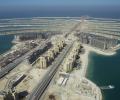
Ongoing geopolitical tensions in West Asia have slowed deal momentum in Dubai's luxury residential market, but Indian high-net-worth individuals (HNIs) are not exiting their marquee assets, with any 'discounted' resale deals attributed to investor liquidity stress rather than geopolitical flight.

Listed capital market companies in India delivered strong fourth-quarter earnings growth, with a universe of 12 firms posting 30 per cent year-on-year revenue growth and 19 per cent earnings growth in Q4FY26, despite mark-to-market (MTM) losses impacting headline profitability for some.

Non-banking financial companies (NBFCs) reported encouraging results for Q4FY26 with improved asset quality and earnings, but analysts maintain a cautious near-term outlook due to geopolitical tensions, monsoon risks, and specific portfolio concerns.

Non-resident Indians (NRIs) in the Gulf region are increasingly purchasing term life insurance policies from India, driven by geopolitical uncertainties in West Asia and the significant cost advantages offered by Indian products, with the GCC region now contributing over half of the total NRI demand.

The SIF vertical, which allows MFs to offer complex products to relatively sophisticated investors, has managed to garner scale in just seven months of the launch of the first products.
The BSE benchmark traded 44.43 points up at 76,521.93, and the Nifty quoted 17.20 points higher at 24,048.85. Track Stock markets on May 26.

Net investments into equity mutual fund schemes in India remained elevated at approximately 38,440 crore in April, despite a slight dip from March's high and a 3% month-on-month decline in Systematic Investment Plan (SIP) inflows.

'Trading without strict position sizing, stop-loss discipline, or a clear exit plan almost guarantees losses.' 'Chasing tips, reacting to intraday noise, or assuming frequent trading improves outcomes are equally damaging habits.'

Shareholder payouts by India Inc, including dividends and buybacks, increased by 2.2 per cent year-on-year in FY26 to $5.06 trillion, but this growth lagged the 18.8 per cent rise in reported net profit for the third consecutive year, leading to the lowest dividend payout ratio in 12 years.

Early data from the World Cup indicates that sportswear giant Adidas is currently gaining a significant advantage over rival Nike in brand visibility and sales. Adidas, an official sponsor, is seeing a substantial surge in apparel spending and foot traffic, particularly driven by jersey sales. While Nike's business is also growing, it is being outpaced by Adidas, which appears to have a more resonant product offering. Nike, facing declining market share and intense competition, is relying on the World Cup for a boost, though its footwear presence remains strong.

Preferential equity listings in India reached an unprecedented 1,307 in FY26, marking a 33% increase from the previous year and reflecting a strategic choice for companies during market volatility.

Real estate developers are increasingly offering flexible payment plans, such as low booking amounts and deferred payments, to stimulate housing sales and manage affordability concerns without resorting to price cuts, as sales volumes declined by 14 per cent in 2025.

Supported by strong buoyancy in public sector capital expenditure (capex), growth in infrastructure investment is expected to accelerate in 2025-26 (FY26) compared to 2024-25 (FY25), according to the First Advance Estimates of gross domestic product (GDP) for FY26 released by the National Statistics Office (NSO) on Wednesday.

The Reserve Bank of India (RBI) has reported a significant increase in the use of the Indian Rupee (INR) for import and export invoicing and settlement, highlighting its growing internationalisation and mutual benefits for trading partners.

Indian benchmark equity indices Sensex and Nifty surged in early trade, driven by a sharp correction in crude oil prices below USD 100 per barrel and a rally in global markets, fuelled by improving sentiment surrounding US-Iran negotiations.
